
The identity of Barak Valley comprising Cachar, Karimganj and Hailakandi is one of the most persistently misunderstood in Assam’s public discourse. At the heart of this misunderstanding lies a dangerous simplification: equating language with origin and culture with loyalty. Such reductionism has not only distorted history but has also, over time, contributed to the treatment of Barak Valley’s people as second-class citizens within their own state.
Historically, Barak Valley is not an appendage to Assam. The region has been part of the broader Assamese political and administrative space since pre-colonial times, including periods under ancient Kamarupa and other kingdoms. The inclusion of Barak Valley within Assam is not a post-Independence accident; it is rooted in continuity, not convenience.
What sets Barak Valley apart is language. The majority of its population speaks Bengali, including Sylheti and other regional variants. This linguistic reality predates the formation of modern Assam and evolved locally through centuries of interaction with Assamese and other communities. Barak Valley Bengali is not synonymous with Kolkata Bengali, nor does it imply cultural or political allegiance outside Assam.
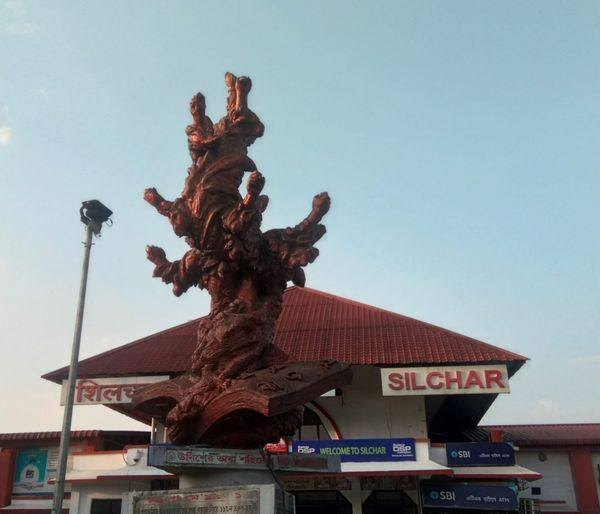
This distinction was formally acknowledged after a tragic constitutional moment in Assam’s history. On 19 May 1961, eleven citizens were killed by police firing at Silchar railway station while protesting the imposition of Assamese as the sole official language of the state. Their sacrifice led to the legal recognition of Bengali as an official language in Barak Valley districts under Assam law. This recognition was not a political concession but a constitutional necessity grounded in democratic principles.
Yet, despite this legal status, Barak Valley’s experience within Assam has often been one of systemic neglect and unequal treatment.
Examples of Second-Class Treatment
1.Administrative Language Practices
Despite Bengali being an official language in Barak Valley, government notifications, circulars, recruitment advertisements and official websites are frequently issued only in Assamese, even for offices functioning exclusively in Barak districts. This creates barriers for ordinary citizens in accessing public services.
2.Competitive Examinations and Recruitment
State-level examinations and recruitment processes often mandate Assamese language proficiency, even for postings in Barak Valley. This effectively disadvantages local Bengali-speaking candidates in their own region and reinforces structural exclusion.
3.Educational and Cultural Marginalisation
Compared to Upper Assam, Barak Valley has consistently received lower investment in higher education institutions, medical infrastructure and cultural bodies, despite comparable population size. The absence of proportional development has long been acknowledged but rarely corrected.
4.Symbolic Exclusion
Cultural representation in state-sponsored events, textbooks and official narratives disproportionately centres Upper Assam, while Barak Valley’s history—including the 1961 language martyrs—remains underrepresented in the broader Assamese consciousness.
These patterns have fostered a sentiment among Barak Valley residents that citizenship is shared, but equality is conditional.
It is also essential to separate indigenous Bengali-speaking Assamese citizens of Barak Valley from issues related to illegal migration, which are administrative and border-management concerns. Conflating the two is not only inaccurate but deeply unjust. The people of Barak Valley have repeatedly affirmed their commitment to Assam’s unity, political stability and constitutional framework.
Equally important is recognising that Barak Valley identity is not religious. Hindus, Muslims, Bishnupriya Manipuris, tea-tribe communities and Assamese speakers coexist in the region. The unifying factor is regional belonging, not faith.
Most residents articulate their identity with clarity and restraint:
Assamese by state and citizenship, Bengali by language, Barak Valley by history and culture.
Acknowledging this layered identity does not weaken Assamese nationalism; it strengthens it. Assam has always been plural in language and culture. A mature state does not demand uniformity—it ensures dignity.
As Assam moves forward, the question is not whether Barak Valley belongs to Assam. That question was settled long ago. The real question is whether Barak Valley will finally receive equal respect, representation and recognition within Assam.
(The article is solely the opinion of the author. The views expressed here are solely personal and not in any way connected to any organisation or any political party.)

Writer is a Social Worker at Assam and North East India